
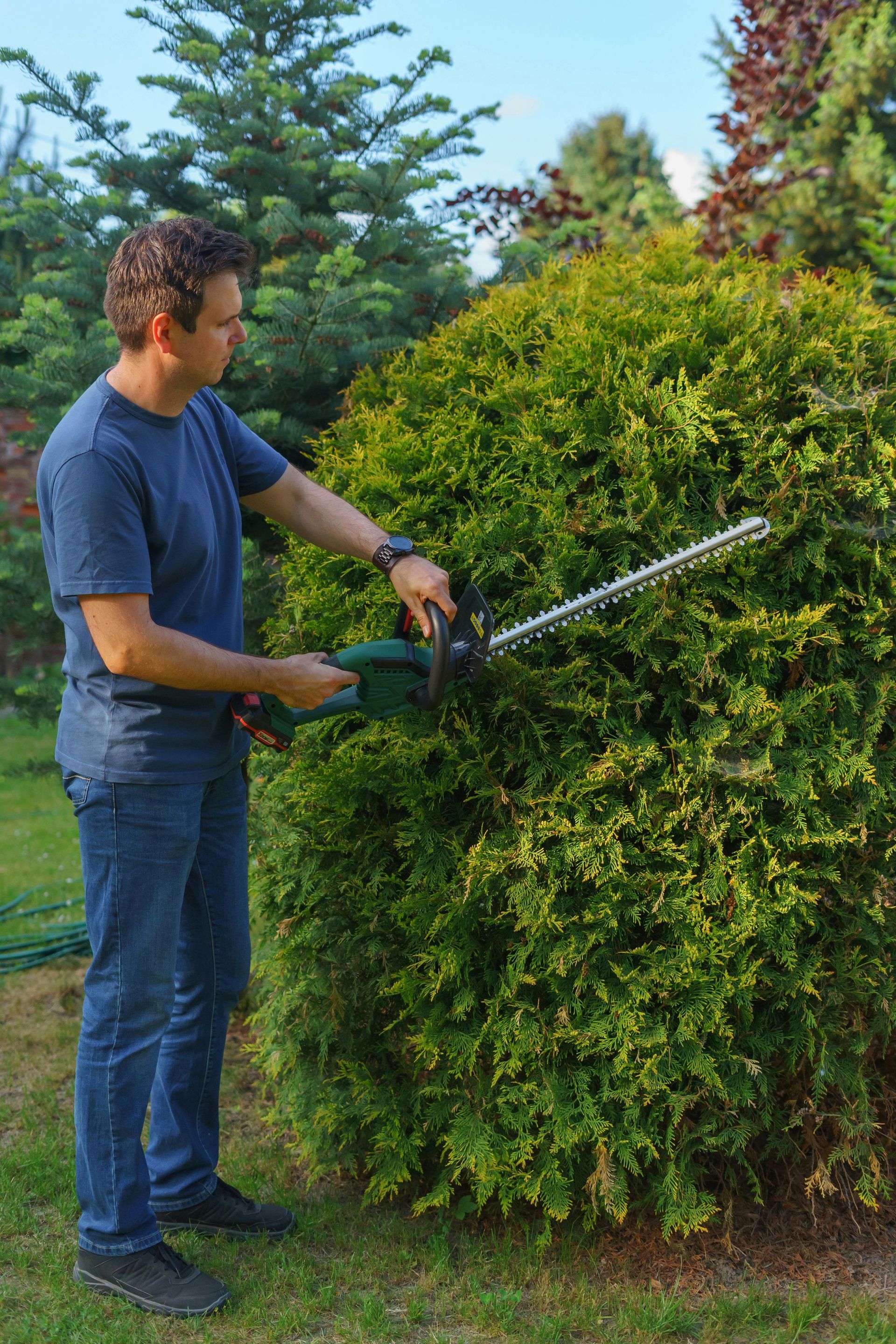
Overgrown Plants Brought Back to Shape
Professional hedge and shrub trimming services throughout Waterloo
When hedges grow past window sills in Waterloo, block sight lines from your driveway, or develop bare patches where interior branches no longer receive light, trimming restores shape and allows sun and air to reach inner growth zones. Shrubs that spread beyond bed edges or lean toward structures benefit from selective pruning that redirects growth, opens up crowded centers, and prevents limbs from rubbing against siding or fencing.
Revive Property Maintenance schedules hedge and shrub trimming during seasons that promote healthy regrowth in Upstate New York, avoiding late fall cuts that leave plants vulnerable before dormancy and timing work to match each species' growth cycle. Trimming is done with sharp tools that make clean cuts instead of tearing or crushing stems, reducing stress and minimizing entry points for disease or pests.
If your shrubs look uneven, hedges have grown taller than you prefer, or plants are crowding walkways and windows, contact us to schedule trimming and shaping for your Waterloo property.
Waterloo, NY
13165
- Mon - Sun
- Open 24 Hours
Clean Cuts That Encourage Growth Instead of Damage
Hedge and shrub trimming in Waterloo begins with a walkthrough to identify overgrown sections, deadwood, and areas where interior light has been blocked by dense outer growth. Each plant is shaped according to its natural form and intended function, whether that means maintaining a formal hedge line, opening up a shrub's canopy, or clearing branches away from structures and pathways.
After trimming, your shrubs and hedges take on a balanced appearance with improved airflow through the canopy and sunlight reaching previously shaded interior branches. Plants respond with new growth in the weeks following a trim, filling in gaps and maintaining the shape established during the service without immediate regrowth that requires constant recutting.
Debris from trimming is cleared from beds, walkways, and turf to prevent smothering grass or creating pest habitat near your foundation. If lot clearing is needed to remove invasive shrubs, volunteer trees, or overgrown vegetation from unused property areas, that work is scheduled separately from ornamental plant trimming to avoid damaging landscaping during heavy equipment use.
Most Questions Focus on Timing and Plant Health
Homeowners preparing for hedge and shrub trimming often ask when to schedule work for best results, how much can be removed without harming the plant, and what to expect from regrowth after trimming is finished.
When should hedges and shrubs be trimmed in Waterloo?
Spring and early summer are ideal for most species because plants actively grow and recover quickly after cuts. Late fall trimming is avoided since new growth may not harden off before winter, leaving plants vulnerable to cold damage and dieback.
How much can be trimmed without harming the plant?
You can safely remove up to one-third of a shrub's growth in a single session without causing long-term stress. Removing more than that reduces the plant's ability to photosynthesize and recover, especially if interior wood is exposed to direct sun without acclimation.
What tools are used for hedge and shrub trimming?
Revive Property Maintenance uses sharp hand pruners for detailed work, hedge shears for formal lines, and pole pruners for tall sections, all maintained to make clean cuts that heal quickly. Power trimmers are used on large hedges where uniform shaping is needed across long runs.
How often should hedges and shrubs be trimmed?
Most hedges benefit from trimming once or twice per growing season to maintain shape and density, while shrubs may only need attention once a year or every other year depending on growth rate and desired appearance. Fast-growing species require more frequent attention than slow-growing varieties.
Will trimming make my shrubs grow back thicker?
Trimming encourages branching and denser growth if cuts are made above growth nodes where new shoots can emerge. However, severe cuts into old wood on some species may not regenerate, so shaping is done gradually to maintain fullness while controlling size.
If your Waterloo hedges obstruct windows or sightlines, shrubs crowd pathways and building edges, or plants have lost their shape and developed bare interior zones, trimming restores balance, improves airflow, and redirects growth back toward healthy, manageable forms. Revive Property Maintenance schedules trimming work during seasons that promote recovery and regrowth suited to Upstate New York conditions.